
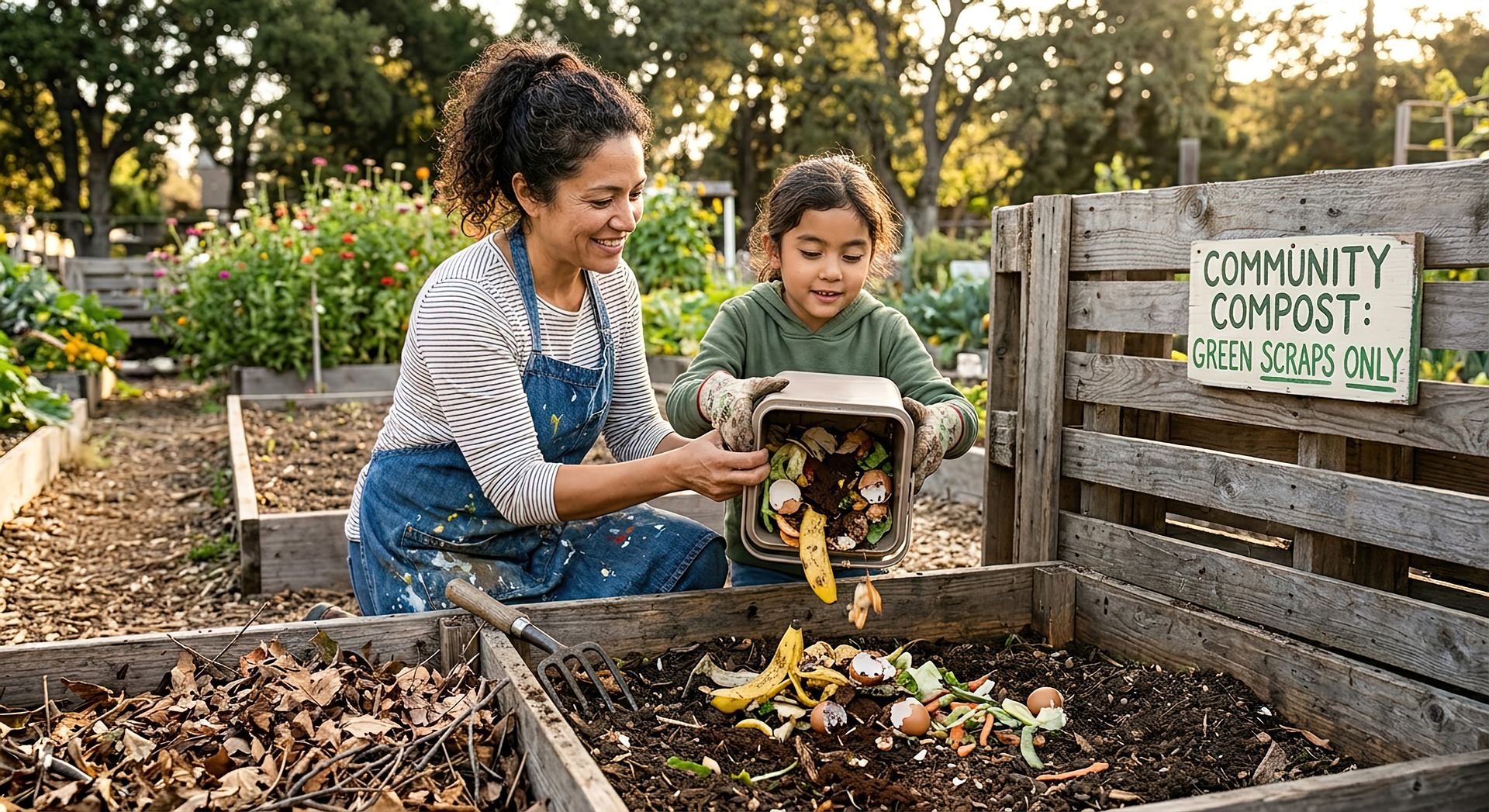
Composting, Soil, Organic Matter, and the Regeneration of Productive Land
Why soil regeneration matters
Soil organic matter plays a fundamental role in maintaining productive land, supporting healthy soil processes, and strengthening the resilience of agricultural and ecological systems. Every harvest removes nutrients and organic material from the production cycle. Wind and water can carry away exposed topsoil.
Repeated disturbance can damage soil organic matter structures, while compaction can restrict the movement of air, water, and roots. When these pressures continue without adequate restoration, the land gradually loses some of its capacity to support productive vegetation.
The consequences extend beyond agricultural yields.
Soil influences how landscapes absorb and retain rainfall, how plants access nutrients, how microorganisms sustain biological processes, and how effectively vegetation protects the ground against erosion. When soil loses organic matter and biological activity, farmers and land managers may face greater difficulty maintaining productivity, particularly during periods of drought, intense rainfall, or other environmental stress.
Regenerating soil therefore requires more than just replacing the nutrients that a particular crop consumes. We must maintain the physical structure, biological activity, and organic resources that allow soil to function as a living system.
The Food and Agriculture Organization’s work on soil organic carbon explains why soil organic matter plays such an important role in soil function. It helps store and release water and nutrients, supports food production, and contributes to the ecological services that healthy soils provide.
This distinction matters.
A fertilizer application may address a nutrient deficiency, but it does not automatically rebuild depleted organic matter, restore damaged soil structure, or reestablish the biological relationships that support long-term soil function. Soil regeneration must address these integrated, systemic processes rather than treating each symptom as an isolated problem.
Understanding soil organic matter: more than decomposing plant material
Soil organic matter consists of material that originates from living organisms and enters the soil through natural processes. It includes decomposing leaves, roots, stems, crop residues, animal manures, microorganisms, and the remains of other organisms. As biological communities break down these materials, they transform them into a range of compounds that interact with mineral particles, water, air, and living organisms.
Organic matter does not simply disappear as decomposition proceeds. Some of its carbon returns to the atmosphere through microbial respiration, while other portions enter more persistent forms within the soil. Microorganisms also transform nutrients and organic compounds, making some nutrients available to plants and incorporating others into their own biomass.
These processes explain why organic soil matter contributes to several essential soil functions.
It helps build and stabilize soil organic structure.
Soil particles do not function as an effective growing medium merely because they occupy the same space. They form aggregates through physical, chemical, and biological interactions. Organic compounds, fungal activity, microbial products, and plant roots all contribute to the formation and stability of these aggregates. Well-structured soil generally provides a more favorable arrangement of pores through which water, air, and roots can move.
It supports water retention and infiltration.
Organic soil matter contributes to the capacity to hold water, while improved aggregation and pore structure can help rainfall enter the soil rather than flow across the surface. These benefits depend on soil texture, structure, depth, slope, and management. Organic matter cannot overcome every limitation, but it can improve important aspects of how soil receives and retains water.
It supports nutrient storage and cycling.
Organic materials contain nutrients that microorganisms gradually transform and release. Soil organic matter also contributes to the soil’s capacity to retain certain nutrients, reducing the likelihood that water will carry them away before plants can use them. The timing and availability of nutrients depend on the material, soil conditions, microbial activity, and the needs of the plants growing there.
It feeds soil organisms.
Bacteria, fungi, earthworms, and other organisms use organic soil materials as sources of energy and nutrients. Their activity contributes to decomposition, nutrient cycling, aggregation, and the biological relationships that support plant growth.
The USDA Natural Resources Conservation Service explanation of the role of organic matter describes these relationships and their effects on soil structure, water movement, nutrient retention, and biological activity.
The important point is that organic matter does not perform one isolated function. It contributes to a network of physical, chemical, and biological processes. That is why soil-building practices must consider the entire soil system.
Composting: returning organic resources to productive land
Composting provides a practical way to transform suitable organic soil materials into a soil amendment. Rather than discard plant residues, leaves, food scraps, and appropriate animal manures, land managers can direct these materials into a managed decomposition process and return the resulting compost to the land.
Microorganisms perform the central work. Bacteria, fungi, and other decomposers break down organic materials and transform them into a more stable product. The process requires suitable moisture, oxygen, temperature, and a workable balance of carbon-rich and nitrogen-rich materials.
Carbon-rich materials commonly include dry leaves, straw, woody plant residues, and similar materials. Nitrogen-rich materials can include fresh green vegetation, suitable food scraps, and animal manure. Combining different materials helps create conditions that support decomposition.
The purpose is not simply to make a pile of waste disappear. Proper composting manages biological activity so that organic materials become a useful amendment while reducing the risks associated with applying raw or inadequately decomposed materials.
The FAO publication On-Farm Composting Methods explains the underlying process and the factors that influence it, including aeration, moisture, nutrient balance, temperature, and curing.
Why the composting process matters
A compost pile needs enough oxygen to support aerobic microorganisms. When materials become too wet or compacted, air cannot circulate effectively. Anaerobic conditions can then develop, slowing the process and producing unpleasant odors and compounds that may harm plants.
Moisture also requires attention. Microorganisms need water to carry out decomposition, but excessive moisture fills the spaces that otherwise allow air to move through the pile. A pile that dries out too much may decompose very slowly, while a saturated pile may develop oxygen shortages.
The mixture itself matters. Carbon-rich materials provide energy and structural components, while nitrogen supports microbial growth and the formation of proteins and other essential compounds. A poor balance can slow decomposition or cause nitrogen losses and odors.
Temperature provides another indication of microbial activity. During active aerobic composting, microorganisms generate heat as they break down organic materials. A properly managed thermophilic phase can help reduce certain pathogens and weed seeds, but the pile must receive adequate treatment throughout its mass. Simply observing a hot center does not establish that every portion has reached the necessary conditions.
Composting also requires a curing period. The pile may cool after the most active decomposition phase, but cooling alone does not necessarily mean that the material has matured. Continued decomposition helps stabilize the compost and reduces the risk that immature material will compete with plants for nitrogen or interfere with root development.
These details matter because poor composting can waste valuable resources or create problems in the soil. Mature, suitable compost can contribute organic matter and nutrients. Immature, contaminated, excessively salty, or poorly managed material can introduce unwanted substances or damage sensitive plants.
Why compost alone cannot regenerate soil
Compost can improve soil, but it cannot substitute for a complete soil-management system.
A land manager might apply large quantities of compost and still allow soil to deteriorate through repeated tillage, bare-ground exposure, compaction, erosion, or unsuitable irrigation practices. In that situation, the manager continually adds organic material while the land continues to lose its structure and productive capacity.
Soil regeneration requires practices that protect the organic matter already present, encourage new biological inputs, and reduce the processes that cause degradation.
Keep the soil covered
Bare soil faces direct exposure to rainfall, wind, and temperature fluctuations. Raindrops can break apart exposed aggregates and contribute to surface sealing. Water can then run across the surface, carrying soil particles and nutrients away. Wind can also remove fine particles and organic-rich topsoil.
Mulch, crop residues, living ground cover, and cover crops provide protection. They intercept rainfall, moderate soil temperatures, reduce direct exposure, and contribute organic material as they decompose.
Ground cover also helps maintain a more favorable habitat for soil organisms. It can reduce moisture loss from the surface and help limit the temperature extremes that affect biological activity.
The USDA guidance on cover crops and soil health explains how living cover can reduce erosion, improve water infiltration, contribute organic matter, and support beneficial soil organisms.
Maintain living roots
Plants contribute to soil regeneration while they grow, not only after they die.
Living roots release compounds into the surrounding soil. These root exudates provide resources for microorganisms and help establish relationships between plants and the organisms that inhabit the soil. Roots also create channels through which water and air can move, while their growth helps stabilize soil.
When plants die, their roots and other residues become additional organic resources. Soil organisms break down this material and return nutrients to the wider system.
Maintaining living roots for more of the year can therefore help sustain biological activity and reduce the periods when soil remains exposed and unproductive. Cover crops, perennial plants, diverse crop rotations, agroforestry, and carefully managed vegetation can all contribute, depending on local climate, soil conditions, water availability, and production goals.
The objective is not to keep every piece of land under the same vegetation throughout the year. Different environments and agricultural systems require different approaches. The objective is to avoid unnecessary periods of bare, biologically inactive soil where practical alternatives exist.
Reduce unnecessary disturbance and compaction
Tillage can prepare land for planting and manage certain weeds, but repeated or intensive disturbance can break apart soil aggregates, disrupt biological habitats, and accelerate the decomposition of organic matter. The effects vary with soil type, moisture, equipment, frequency, and cultivation methods.
Compaction creates a different problem. Heavy machinery, repeated vehicle traffic, livestock concentration, or cultivation when soil is too wet can compress soil particles and reduce pore space. Compacted soil restricts root development and can interfere with water infiltration and drainage.
Land managers can reduce these pressures through appropriate traffic patterns, careful timing of field operations, reduced tillage where suitable, and management practices that prevent repeated pressure on vulnerable areas.
The USDA soil health principles for small-scale agriculture bring these practices together through four related priorities: minimize disturbance, maximize soil cover, increase biodiversity, and maintain living roots.
These priorities do not prescribe one universal method. They provide a framework for choosing practices that protect soil functions under local conditions.
Building soil fertility through biological diversity
A healthy soil ecosystem depends on a broad community of organisms and a continuing supply of suitable organic resources. Different organisms perform different roles, and their activities influence one another.
Bacteria and fungi decompose organic materials and transform nutrients. Some fungi form associations with plant roots that help plants access nutrients and water. Earthworms and other soil fauna fragment organic residues, create channels, and contribute to the formation of aggregates. Other organisms regulate populations of microbes and small animals, including organisms that can damage plants.
Plant diversity helps support this biological network by supplying different root structures, organic compounds, and seasonal patterns of growth. A landscape with a mixture of grasses, legumes, shrubs, trees, and other suitable vegetation can create a wider range of habitats and food resources than a system that relies on a single plant species.
Crop rotation, mixed planting, cover crops, agroforestry, and perennial vegetation can all contribute to this diversity. The appropriate combination depends on the purpose of the land and the ecological conditions that govern it.
Permaculture offers a useful design approach because it encourages land managers to consider relationships among plants, soil, water, animals, people, and built infrastructure. Instead of treating composting, planting, water management, and food production as unrelated activities, a Permaculture system looks for ways to make these functions reinforce one another.
For example, a productive landscape may generate plant residues that supply a composting operation. The compost may then support nursery production and food cultivation. Trees and perennial vegetation can provide shade, habitat, biomass, and root systems, while ground cover protects the soil between planting cycles. Careful water management can support vegetation while reducing runoff and erosion.
The value lies in the relationships among these functions. Each activity can contribute resources or services that strengthen another part of the system.
Soil regeneration must reflect local conditions
No single compost recipe, planting method, or soil amendment works equally well everywhere. Soil texture, acidity, salinity, drainage, rainfall, temperature, slope, existing vegetation, and land-use history all influence the results.
A sandy soil, for example, presents different water-retention challenges from a heavy clay soil. A poorly drained site requires a different approach from a dry slope with rapid runoff. A soil with excessive salinity requires more than the addition of organic matter. A contaminated site may require testing and appropriate remediation before anyone introduces compost or begins food production.
Land managers should therefore begin with an understanding of the soil they intend to improve.
Basic assessment can include soil texture, pH, organic matter or organic carbon, nutrient levels, drainage, compaction, and visible signs of erosion. More specialized conditions may require laboratory analysis. Repeated measurements can help determine whether management practices actually improve the soil rather than merely produce a temporary increase in plant growth.
This matters because soil regeneration takes time. Organic matter levels change gradually, and the effects of management practices can vary between seasons. A single harvest cannot establish whether a soil-building program has succeeded. Land managers need to observe changes in soil structure, water movement, vegetation, biological activity, and productive performance over time.
A sound approach also considers the source of organic materials. Compost should not contain hazardous contaminants, persistent chemicals, unsuitable industrial residues, or other substances that could harm soil organisms, crops, water, or people. Manure and other biological materials require appropriate handling and treatment. The value of recycling organic resources depends on maintaining their safety and suitability.
The Permaculture Center: turning soil regeneration into a productive system
The Permaculture Center can contribute to soil regeneration through more than the production of compost or the cultivation of food. It can bring together several activities that support the long-term improvement of productive land.
These activities may include collecting and processing suitable organic materials, producing compost and enriched growing media, propagating plants, maintaining nurseries, supporting food production, demonstrating soil-building practices, and teaching the skills required to manage these systems.
The Center can also help communities understand how organic resources move through a productive landscape. Crop residues, fallen leaves, pruned vegetation, and suitable organic waste need not become disposal problems. With appropriate handling and processing, these materials can support compost production and other productive uses.
Plant propagation provides another important connection. Nurseries can supply trees, shrubs, ground-cover species, food crops, and other vegetation suited to local conditions. These plants can support agricultural production, reforestation, agroforestry, erosion control, and the restoration of degraded landscapes.
The Center’s educational role matters just as much as its productive activities. Communities need more than access to compost or seedlings. They need practical knowledge about soil assessment, compost management, plant selection, water conservation, nursery operations, and the maintenance of productive landscapes. Training can help people apply these practices independently and adapt them to their own land and resources.
The OPISAC Permaculture Centers program describes this integrated and adaptive approach, including composting, soil improvement, plant propagation, food production, and practical education. These functions connect environmental restoration with productive capacity and community development.
This approach also reflects the broader RUrban concept. Rural production and urban demand do not exist independently. Communities depend on networks that connect food production, processing, distribution, employment, infrastructure, education, and access to resources. Soil regeneration can strengthen the productive foundation of these networks, while local processing and practical training can help communities retain more of the value generated by their own resources.
The objective is not simply to produce better soil at one facility. It is to develop the knowledge, materials, skills, and productive relationships that allow more communities to maintain and regenerate the land on which they depend in addition to the more vulnerable environments around the globe.
Measuring progress: How do we know the soil is improving?
Soil regeneration should produce observable improvements, but land managers must measure more than crop yields.
A field may produce a good harvest while losing organic matter or suffering compaction. Conversely, a restoration site may show improvements in soil cover, infiltration, and biological activity before it produces substantial agricultural output.
A useful monitoring program considers several indicators together:
- Organic matter or soil organic carbon: Tracks changes in the soil’s organic resource base.
- Soil structure and aggregation: Helps indicate whether soil particles form stable aggregates and maintain useful pore spaces.
- Water infiltration and retention: Helps assess how effectively the soil receives and stores rainfall.
- Compaction and root development: Shows whether roots can penetrate the soil and access water and nutrients.
- Biological activity: Observations of earthworms, roots, decomposition, and other biological indicators can help assess changes in soil life.
- Vegetation cover and erosion: Shows whether the land protects its surface and maintains productive plant growth.
- Nutrient availability and pH: Helps determine whether the soil can supply essential nutrients under appropriate growing conditions.
The FAO Global Soil Partnership’s protocol for sustainable soil management identifies soil organic carbon as an important indicator because it relates to soil structure, aggregate stability, porosity, water retention, and soil fauna.
No single indicator can establish overall soil health. A meaningful assessment combines measurements with observations and considers the soil’s intended function. Agricultural land, forest soil, wetlands, and restoration sites do not all require identical performance measures.
Monitoring also allows communities to distinguish between practices that produce genuine improvements and those that merely shift problems elsewhere. For example, a composting operation may divert organic waste from disposal, but its wider value also depends on the quality of the finished compost, the safety of its materials, the energy and water it consumes, and the benefits it provides to the land.
That kind of assessment supports better decisions and helps communities direct their resources toward practices that produce lasting results.
Regenerating soil strengthens the entire landscape
Soil regeneration begins with the land itself, but its benefits do not stop at the farm boundary.
Healthy soils support vegetation that protects watersheds, stabilizes slopes, and provides habitat. Productive soils can support food forests, agroforestry, and other systems that combine food production with ecological restoration. Diverse vegetation can also contribute to ecological corridors that connect fragmented habitats and allow natural communities to function across larger landscapes.
These relationships matter to human development as well. Communities depend on productive land for food, employment, materials, and economic activity. When land loses its productive capacity, people may face higher production costs, declining yields, greater exposure to environmental hazards, and increased pressure to seek resources elsewhere.
Soil-building practices cannot resolve every environmental or economic challenge. They can, however, strengthen one of the foundations on which agriculture, ecological restoration, and community resilience depend.
Composting returns suitable organic resources to the land. Living roots feed biological communities. Ground cover protects the surface. Reduced disturbance helps preserve soil structure. Diverse vegetation supports a wider range of ecological relationships. Careful monitoring helps determine whether these practices produce lasting improvements.
Together, these activities move soil management beyond short-term production and toward the maintenance and regeneration of productive landscapes.
Building better soil is not simply an agricultural technique. It is an investment in the biological, ecological, and productive foundations of sustainable human development.
Leave a Reply